If you've lifted your truck, gone up in tire size, or started towing heavy, you've probably wondered whether you need better brakes for towing and the added weight. The honest answer: sometimes yes, sometimes no, but the physics definitely changed the day you added mass, and understanding what changed tells you exactly what to buy.
- You don't always need bigger brakes, but if you added larger, heavier tires, a lift, or tow near your truck's rating, your braking has changed and you should upgrade the friction, not just the size.
- The right brakes for towing usually means better pads and rotors that resist heat and fade, not necessarily a giant big-brake kit.
- Watch for the warning sign: brake fade on long descents (a soft, fading pedal) means your brakes are overheating and it's time to upgrade.
01 · Why bigger tires and towing strain your brakes
Braking is really about converting motion into heat. Your brakes take the energy of a moving vehicle and turn it into heat in the pads and rotors, which then dissipate it into the air. Anything that adds energy (more weight or more speed) adds heat. Anything that traps heat leads to trouble. Here's what changes when you tow or run bigger tires:
- Trailers add mass. More weight behind you means more energy your brakes have to absorb on every stop, and far more on a long downhill. This is the single biggest strain.
- Bigger, heavier tires and wheels add rotating mass and leverage. A larger-diameter tire acts like a longer lever against the brake, so the same brake has to work harder to slow it. Heavier off-road tires also carry more rotational inertia to stop.
- Lifts raise the center of gravity. That doesn't directly overheat the brakes, but it changes weight transfer and stability under hard braking, another reason to keep braking consistent and fade-free.
- Heat builds and doesn't escape. Repeated or prolonged braking (city towing, mountain grades) stacks heat faster than the brakes can shed it.
The result of all that trapped heat has a name, and it's the thing you actually want to prevent.
02 · Brake fade: the real reason to upgrade
Brake fade is the loss of stopping power when brakes get too hot. It shows up two ways: the pad's friction material overheats and stops gripping as well, and in severe cases the brake fluid boils, putting compressible gas bubbles in the lines so the pedal goes soft or sinks to the floor. Either way, you push the pedal and the truck doesn't slow like it should, exactly when you're heaviest and need it most, like halfway down a long grade with a trailer.
A soft, mushy, or fading pedal on a long descent is your brakes telling you they're over their limit. That's not a "someday" upgrade. Heat-related brake failure while towing is genuinely dangerous. Better pads, rotors, and fresh high-temp fluid are the fix.
The good news: preventing fade is mostly about heat management and better friction material, not necessarily bigger everything. That's why the smartest towing brake upgrade is often pads and rotors, not a full big-brake kit.
03 · When stock brakes are fine, and when to upgrade
Not everyone needs to touch their brakes. Be honest about how you actually use the truck:
| Your setup | Brake plan |
|---|---|
| Mild lift, modest tire bump, no towing | Stock is usually fine, just keep them maintained |
| Larger/heavier tires, occasional light towing | Upgrade to severe-duty or tow-rated pads; quality rotors |
| Regular towing near your truck's rating | Tow/severe-duty pads + slotted or vented rotors + high-temp fluid |
| Heavy, frequent towing or mountain hauling | Full severe-duty setup; consider a big-brake kit if you fade repeatedly |
| You've felt brake fade or a soft pedal on descents | Upgrade now: pads, rotors, and fresh fluid |
One key point: your truck was engineered to brake at its rated weight, so staying within the manufacturer's GVWR and towing ratings matters more than any part. Bigger tires alone often don't require a brake upgrade, but they do make good pads and rotors more important, and they make skimping on cheap ones a worse idea.

04 · The best brakes for towing: pads, rotors and kits
Here's what actually helps, in the order most people should consider it:
1. Severe-duty / tow-rated brake pads
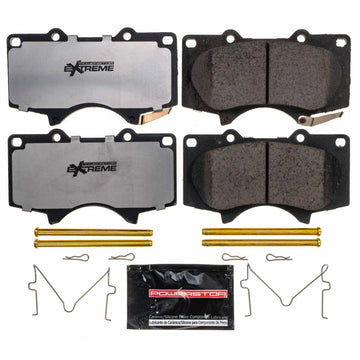
This is the highest-value upgrade. Pads designed for towing and severe duty use friction compounds that hold their bite at high temperature and resist fade far better than standard pads. Look for pads explicitly rated for truck/tow or "severe duty." They're the difference-maker on long descents. Browse brake pads and filter to your vehicle.
2. Better rotors: vented, slotted, or drilled-and-slotted
Rotors are heat sinks. A quality rotor with good venting sheds heat faster; slotted rotors help sweep away gas and debris from the pad surface, which keeps bite consistent when hot, a real benefit for towing. Drilled rotors look aggressive and shed a little more heat, but under sustained heavy-truck heat some drilled designs can be more prone to stress cracking, so many tow-focused owners prefer slotted-only. Shop brake rotors for your truck.
3. High-temperature brake fluid
Cheap and important. Fresh fluid with a higher boiling point directly fights the pedal-goes-soft failure mode. Flush old, moisture-laden fluid before a big towing trip.
4. A big-brake kit, but only if you truly need it
Larger rotors and multi-piston calipers add serious heat capacity, and they're the right call for the heaviest, most frequent towing or if you fade even with good pads and rotors. But they're the most expensive route, and for most weekend towers a good pad-and-rotor combo with fresh fluid solves the problem for far less. Don't buy a kit to fix a problem better pads would have solved.
Replace pads and rotors in axle pairs and let them bed in properly. Fresh pads on fresh rotors give the most consistent, fade-resistant braking, and a clean surface is what makes a severe-duty compound perform as intended.
05 · Towing wears brakes faster, so plan for it
Even with the right parts, towing and heavy tires accelerate wear. Pads and rotors that might last well past 50,000 miles on a light commuter can wear noticeably faster under load. Our guide to how long brake pads last explains the ranges and why towing sits at the short end. Plan on inspecting more often.
A few habits protect your brakes as much as any part:
- Use engine braking / tow-haul mode on descents so the transmission holds you back instead of riding the brakes the whole way down.
- Brake firmly then release rather than dragging the pedal continuously. Dragging builds constant heat.
- Make sure your trailer brakes work. A properly adjusted trailer brake controller lets the trailer help stop itself, taking huge load off your truck's brakes.
- Listen and feel for warning signs. New noises or vibration under load are early flags, so have them checked before your next tow.
Shop severe-duty pads and slotted rotors, such as Power Stop Z36 truck and SUV pads, matched to your exact truck. Shop tow-rated brake pads ›.
Guidance here is general. Always stay within your vehicle's manufacturer GVWR and towing ratings, and confirm the correct pads, rotors, and fluid for your specific year, make, and model before ordering. Brakes are a safety-critical system, especially under load; if you experience brake fade, a soft pedal, or reduced stopping power while towing, stop and have the system inspected by a qualified technician before continuing.