Catalytic converter replacement cost is one of those repairs that makes people wince. Quotes range from a few hundred dollars to well over four thousand, and it is hard to tell whether you are being charged fairly. This guide breaks the cost into parts and labor, gives honest OEM vs aftermarket ranges, shows what actually moves the number, and explains how to save real money without buying a converter that will not pass a smog test. All figures are realistic ranges that vary by vehicle.
- Aftermarket replacement runs about $400 to $2,500 installed; OEM about $1,500 to $4,000+. It varies a lot by vehicle.
- The part is most of the bill. Labor is usually $100 to $400; the converter itself swings the total because of the precious metals inside.
- A quality aftermarket direct-fit converter can cost 50 to 80% less than OEM and still pass emissions, as long as it is EPA-compliant, or CARB-legal where required.
01 · Parts vs labor: where the money goes
A catalytic converter replacement is really two numbers stacked together: the converter itself, and the labor to install it. Understanding the split is what lets you control the cost.
- The converter (parts). This is the big variable. Converters contain small amounts of platinum, palladium, and rhodium, some of the most expensive metals on earth, and the amount and mix vary by vehicle. That is why one car's converter is $200 and another's is $2,000+.
- Labor. Comparatively modest, typically $100 to $400. A bolt-on, flanged converter is a quick job; one welded into the exhaust, seized by rust, or buried behind other components takes longer.
The precious metals inside are what make catalytic converters valuable, and what make them a theft target. Their market prices swing over time, which is a big reason converter prices have climbed in recent years. You are mostly paying for chemistry, not steel.
02 · How much is a catalytic converter by type?
There are three broad tiers, and the price gap between them is enormous. Here is how they compare on cost, compliance, and when each makes sense:
| Type | Part price (typical) | Emissions status | Best for |
|---|---|---|---|
| OEM (dealer) | $900 to $3,500+ | Meets original spec | Newer vehicles under warranty; exact factory match |
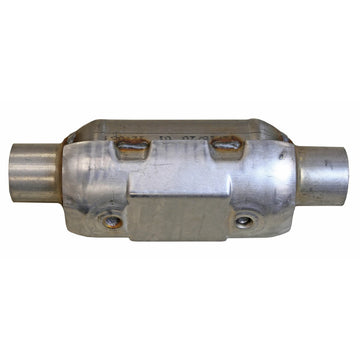
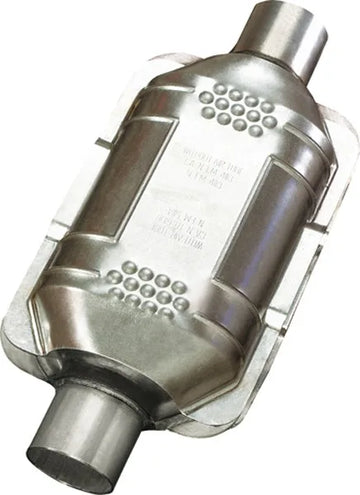
| Aftermarket, EPA-compliant | $150 to $1,400 | Legal in 46 states | Most older cars outside CARB states |
| Aftermarket, CARB-legal (EO number) | $250 to $1,600 | Legal in CARB states | CA and CARB-following states; passing smog |
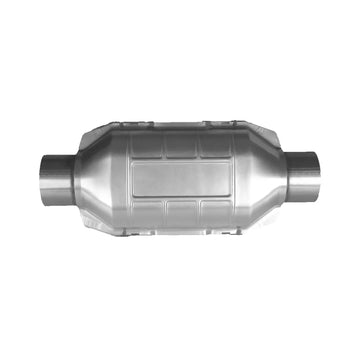
| Universal (weld-in) | $40 to $300 | Legal only if correctly matched and installed | Budget repairs by an experienced installer |

The headline takeaway: for many vehicles a quality aftermarket direct-fit converter costs a fraction of OEM and bolts in the same way. The catch is compliance, which brings us to the one rule you cannot skip.
Standard EPA-compliant aftermarket converters are legal in 46 states, but the CARB states (California, New York, Maine and Colorado) require a converter with a valid Executive Order (EO) number matched to your specific vehicle. Buy an EPA-only part in a CARB state and it will not pass smog. Before ordering, find a CARB-legal converter for your car.
03 · Catalytic converter price by car
Cost varies mainly with engine size, number of converters, and how much precious metal the design uses. Trucks and larger engines with two converters cost more; small economy cars cost less. These are ballpark installed ranges for a single converter and vary by year, trim, and region:
| Vehicle class (example) | Aftermarket installed | OEM installed |
|---|---|---|
| Compact car (Corolla, Civic) | $400 to $1,100 | $1,200 to $2,500 |
| Midsize sedan (Camry, Accord) | $450 to $1,300 | $1,400 to $3,000 |
| Hybrid (Prius) | $700 to $1,800 | $1,800 to $3,500+ |
| Pickup or SUV, V6 to V8 (F-150, Silverado) | $700 to $2,200 | $2,000 to $4,000+ |
| Luxury or performance | $900 to $2,500 | $2,500 to $5,000+ |
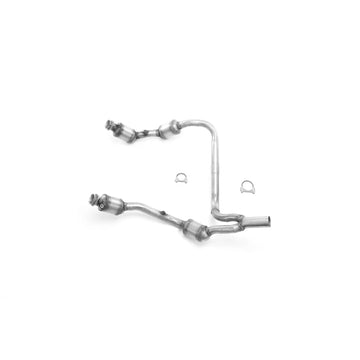
Note that V6 and V8 vehicles often have two converters. If both need replacing, roughly double the figure. Hybrids and some luxury models use high-metal-loading converters, which is why their parts prices run high despite modest engine sizes. If you are ready to price yours, browse all catalytic converters.
04 · What makes one converter cost more than another
If you want to understand your quote, or lower it, these are the levers:
- Precious-metal loading. More platinum, palladium, and rhodium means a pricier part. Modern and low-emission vehicles tend to use more.
- Direct-fit vs universal. Direct-fit bolts in with the right flanges and sensor bungs and costs more; universal converters are cheap but must be cut and welded to fit, so labor and expertise offset the savings.
- Number of converters. Many V6 and V8 and some four-cylinders run two. Replacing both roughly doubles parts cost.
- Location and access. A converter welded into the system, seized with rust, or tucked behind other components adds labor time.
- OEM vs aftermarket. The single biggest lever. A reputable aftermarket direct-fit part is the usual sweet spot for out-of-warranty vehicles.
05 · How to cut the cost legally
You can bring a scary quote down substantially without cutting corners on legality:
Confirm you actually need it
Many converter quotes trace back to a P0420 code that a cheaper O2 sensor or exhaust-leak repair could have solved. Diagnose the root cause before you buy hardware.
Choose a quality aftermarket direct-fit
For out-of-warranty vehicles, a reputable EPA-compliant or CARB-legal direct-fit part typically saves 50 to 80% versus OEM and installs the same way.
Match the part to your state
Buy CARB-legal with an EO number if you are in a CARB state; EPA-compliant is fine elsewhere. Getting this right the first time avoids paying twice.
Consider DIY on a bolt-on design
If your converter is flanged (not welded) and accessible, a confident DIYer can save the labor line. Welded or rust-seized jobs are best left to a shop.
Fix what killed it
If a misfire or rich condition destroyed the old converter, repair that too, or you will be buying another one soon.
Removing a converter or fitting a non-compliant test pipe is illegal for street vehicles under federal law, will fail emissions, and can trigger fresh trouble codes. The legal aftermarket route already saves most of the money, so there is no upside to going illegal.