More than half of aftermarket parts purchases now begin online, and industry research finds that roughly nine in ten do-it-yourself parts buys are shaped by online research first, even when the final swipe happens in a store. So knowing how to buy car parts online without ending up with a box that doesn't fit is a genuinely useful skill. The good news: fitment isn't guesswork. It runs on real data, and once you understand it, "will this part fit my car?" stops being a gamble.
- Learning how to buy car parts online comes down to one thing: matching the part to your exact vehicle using year/make/model/engine (YMME), or, better, your VIN.
- Behind every "fits your vehicle" checkmark is an industry data standard called ACES & PIES. A retailer with clean fitment data is how you avoid the wrong-part return.
- Confirm three things before you pay: the vehicle match, the engine/trim, and the position (front/rear, left/right, upper/lower). Those three catch the vast majority of mistakes.
01 · How auto parts fitment actually works
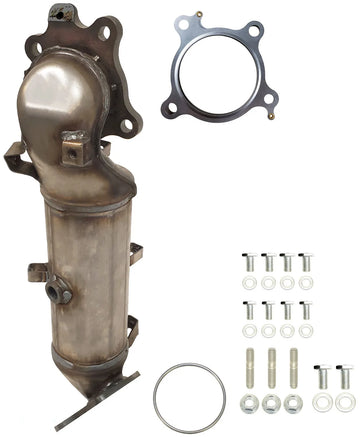
A car part isn't like a phone case where one size covers a whole model year. A 2018 Honda Accord with the 1.5L turbo uses a different catalytic converter, and often different brake and exhaust hardware, than the 2.0L turbo built the same year. Fitment is the system that connects a specific part number to every vehicle configuration it was engineered for.
When a retailer shows "This part fits your vehicle," it is matching your vehicle against a giant compatibility table. The auto-parts industry maintains a shared vehicle database (the VCdb) that catalogs 60,000+ distinct year/make/model/engine/trim combinations. Your specific car is one row in that table. The part's application list is a set of rows it fits. If your row is in that set, it fits.
Bad fitment almost always traces back to missing detail: a listing that only knows "2018 Accord" but not which engine, or a universal part sold as if it were direct-fit. The fix is on both sides: you supply the full detail, and the retailer supplies clean data.
02 · YMME, VIN, and the ACES/PIES catalog data behind the checkmark
Two acronyms quietly run the entire online parts industry. You never see them, but they decide whether the part in your cart is right.
ACES: the fitment standard
ACES (Aftermarket Catalog Exchange Standard) is how part makers publish which vehicles a part fits. It's the "will it fit" data. A well-built ACES record doesn't just say the make and model. It specifies engine, drivetrain (FWD vs. 4WD), transmission, sub-model, and part position. That's why a good site asks for your engine, not just your model.
PIES: the product-information standard
PIES (Product Information Exchange Standard) is everything else about the part: dimensions, materials, what's in the box, images, warranty, and compliance data. If ACES tells you which cars a part fits, PIES tells you what the part is. Retailers refresh these feeds continuously, and the standards are actively maintained, which is why a data-driven store can keep fitment current instead of stale.
YMME vs. VIN: two ways to identify your car
YMME (Year, Make, Model, Engine) is the manual path: you pick each from a dropdown. It works, but it relies on you knowing your exact engine and trim. VIN (Vehicle Identification Number) is the shortcut: that 17-character code on your dash and door jamb decodes to your precise build, engine included, removing the most common source of error.
| Method | How it works | Best for |
|---|---|---|
| YMME | Choose Year / Make / Model / Engine from menus | Quick browsing when you know your engine & trim |
| VIN | Enter your 17-char VIN; it decodes your exact build | The most accurate match. Use it for engine-specific parts |
| Part number | Search the OEM or brand part number directly | Reordering a known-good part or cross-referencing |

03 · How to check fit and avoid buying the wrong part
Identify your vehicle precisely
Enter your VIN if the site accepts one. If you're using YMME, don't skip the engine and sub-model steps. That's where most wrong-part orders begin.
Confirm the green "fits your vehicle" state
On a good retailer, once your vehicle is set the product page should explicitly say it fits your car, not just list a wall of applications. Treat a vague "universal fit" as a prompt to read carefully.
Check position and quantity
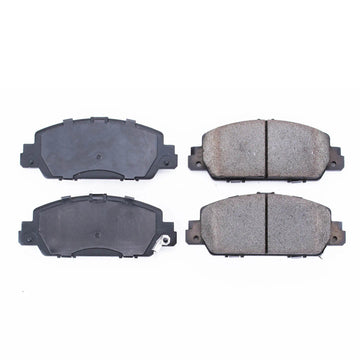
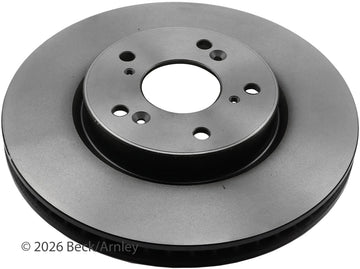
Front vs. rear, left vs. right, upper vs. lower, driver vs. passenger. Many parts are side-specific, and some jobs (brake pads, rotors) are sold per axle or per wheel. Confirm you're buying the right count.
Read direct-fit vs. universal
Direct-fit parts bolt in using factory mounting points. Universal parts (common with some converters and exhaust components) may need cutting or welding. Neither is "bad", but know which you're buying.
Sanity-check the details from PIES
Glance at the specs and the photo. Does the inlet/outlet, bolt pattern, or connector match what you removed? A 30-second look at the product images catches surprising mistakes.
Catalytic converters must also match your emissions standard. If you live in California or a CARB-following state, "fits my vehicle" isn't enough. The converter also needs an EO (Executive Order) number that covers your car, or it won't pass smog. Fitment and legality are two separate checks.
04 · How a retailer's data quality prevents returns
Here's the part most buyers never see: the difference between a smooth order and a frustrating return often has nothing to do with you. It's the quality of the seller's catalog data. A store that ingests clean ACES/PIES feeds, keeps them current, and layers in per-vehicle checks can filter out parts that don't fit before you ever add them to the cart.
That's the model we build on at CarPartGlobal. Set your vehicle once, and the catalog narrows to parts whose fitment data confirms a match, across catalytic converters, brakes, and exhaust systems. When the underlying data is accurate, the wrong part never makes it into your basket in the first place, which is the cheapest return of all: the one that never happens.
| Signal | Data-driven retailer | Thin listing |
|---|---|---|
| Vehicle match | Confirms fit for your exact YMME/VIN | Lists makes/models, leaves you to guess |
| Engine/trim detail | Asks for engine, drivetrain, sub-model | Stops at model year |
| Position & quantity | Front/rear, L/R, per-axle noted | Not specified |
| Emissions/legality | Flags CARB/EPA status where relevant | Silent. You find out at smog check |
05 · A quick checklist for buying auto parts online
- Use your VIN whenever the site supports it. It decodes engine and trim automatically.
- Match the position: front/rear, left/right, upper/lower, and the quantity per axle.
- Confirm direct-fit vs. universal so you know whether it bolts in or needs fabrication.
- Check emissions legality on converters and any tuning-adjacent exhaust parts.
- Keep the old part until the new one is installed and confirmed. It's your reference and, sometimes, your core return.
- Read the return policy anyway. Good data makes returns rare, but a clear policy is a mark of a retailer that stands behind its fitment.
Set your vehicle once and see only parts confirmed to fit it. Shop brakes ›.
Fitment guidance is general. Always confirm the exact part against your specific vehicle's VIN or year/make/model/engine before purchasing, and verify emissions legality (CARB/EPA) for your state on any catalytic converter or emissions-related part. When in doubt, check the part number against your OEM reference or ask a professional installer.