You scanned the car, got a P0420 code, and someone at the counter said "you need a new catalytic converter." Maybe you do. But P0420 (and its twin P0430) is one of the most misdiagnosed codes in the OBD-II system, and plenty of drivers replace a $1,000+ converter when a $60 sensor was the real problem. This guide walks the causes cheapest to most expensive, shows real cost ranges, and explains how to fix a P0420 the right way.
01 · What a P0420 code actually tells you
P0420 is a generic OBD-II trouble code defined as "Catalyst System Efficiency Below Threshold, Bank 1." Every gas car has two oxygen sensors around the catalytic converter, one upstream (before) and one downstream (after). A healthy converter stores and releases oxygen as it scrubs the exhaust, so the downstream sensor's signal should look calm and steady next to the busy, rapidly switching upstream sensor.
When the computer sees the downstream sensor start to mirror the upstream one, it concludes the converter is no longer doing enough work and sets P0420. Notice the logic: the code is triggered by the sensor reading, which is exactly why a bad downstream sensor, or anything that skews the readings like a leak, can throw the code with a perfectly good converter underneath.

They are the same code for different sides of the engine. P0420 is Bank 1 (the side with cylinder #1); P0430 is Bank 2. Inline-4 and inline-6 engines only have Bank 1, so they only ever throw P0420. V6 and V8 engines can set either or both.
02 · P0420 causes, cheapest to most expensive
Before condemning the converter, work through the list in order. Roughly half of P0420 diagnoses that jump straight to a converter miss a cheaper root cause. The sensible order:
- Downstream (rear) O2 sensor. Sensors get slow and lazy with age. A degraded rear sensor can report false efficiency loss. Often the cheapest fix.
- Exhaust leak. A leak at the manifold, flex pipe, or a rusty gasket near the sensor lets outside air skew the oxygen reading. Fix the leak, clear the code.
- Fuel trim, running rich or lean. A dirty MAF sensor, a vacuum leak, a leaking injector, or a bad upstream sensor can flood the converter with unburned fuel and cook it over time.
- Engine misfire or oil/coolant contamination. Raw fuel or burnt oil in the exhaust physically damages the catalyst. Fixing the converter without fixing this just kills the next one.
- The catalytic converter itself. Genuinely worn out from age, high mileage, or contamination from any of the above. This is the real answer often enough, just not first.

If a misfire, oil burning, or a rich condition killed the converter, a new converter will fail again, sometimes within months. Always diagnose why the old one died before installing a new one.
How to diagnose a P0420 yourself
With a scan tool that reads live data you can get most of the way there in your driveway:
Read all stored codes
If P0420 shows up alongside a misfire (P0300 series), lean/rich (P0171/P0174), or O2 sensor codes, chase those first. They are usually the root cause.
Watch the O2 sensors live
The upstream voltage should swing quickly between about 0.1V and 0.9V. The downstream should be far steadier. If the downstream swings almost as much as the upstream, the converter or that sensor is suspect.
Inspect for exhaust leaks
Look and listen around the manifold, flex pipe, and sensor bungs, especially on rust-belt vehicles. A hissing or ticking leak near an O2 sensor is a classic false-P0420 trigger.
Check fuel trims
Long-term fuel trims well outside about plus or minus 10% point to a running-condition problem feeding the converter. Fix that before spending on emissions hardware.
Confirm the converter last
Only after the above check out clean should you conclude the catalyst is worn. A shop can verify with a temperature or backpressure test.
03 · How much does it cost to fix a P0420?
Because P0420 has several possible causes, the "fix cost" is really a range that depends on which cause you actually have. These are realistic ballpark figures. Parts and labor vary by vehicle, region, and whether you do it yourself:
| Repair | Typical parts | Parts + labor (shop) | How likely |
|---|---|---|---|
| Rear O2 sensor | $40 to $150 | $150 to $350 | Common |
| Exhaust leak / gasket | $15 to $120 | $120 to $450 | Common |
| Fix rich / lean | $30 to $250 | $150 to $600 | Fairly common |
| Converter, aftermarket direct fit | $150 to $1,400 | $400 to $2,000 | Sometimes |
| Converter, OEM | $900 to $3,500+ | $1,500 to $4,000+ | Newer cars |
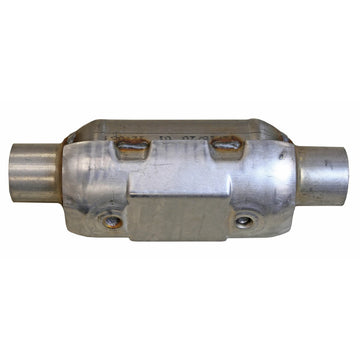
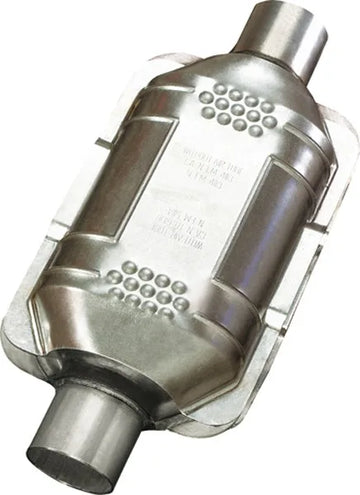
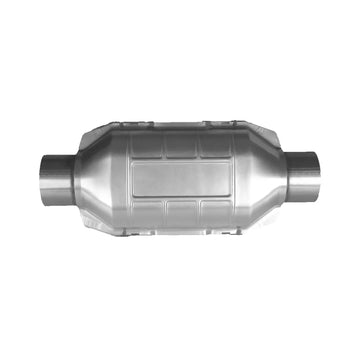
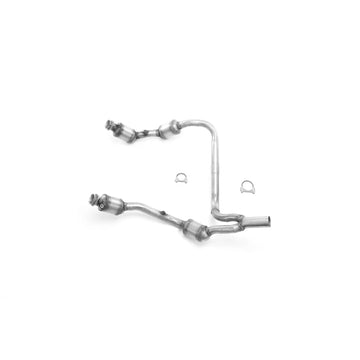
The takeaway: chasing the cheap causes first can turn a feared four-figure repair into a sub-$300 one. And even when you do need the converter, a quality aftermarket direct-fit unit is far cheaper than dealer OEM, often 50 to 80% less, while still meeting the emissions standard your state requires. If replacement is the answer, the parts below are a starting point, or browse all catalytic converters.
04 · Can you drive with a P0420, and will it pass smog?
Mechanically, a P0420 on its own usually will not leave you stranded. The car runs and you can drive it in the short term. The risk is not a breakdown; it is what caused the code. If a misfire or rich condition is behind it, continuing to drive can worsen fuel economy and finish off a converter that was only partway gone.
The bigger practical problem is emissions testing. In states with OBD-II smog checks, a stored P0420 and the check-engine light that comes with it is an automatic fail. Clearing the code before a test does not help either, because erasing codes resets the monitors to "not ready," which is also a fail until the car re-runs its self-tests over normal driving.
California and CARB-following states require converters carrying a valid Executive Order (EO) number. A generic "50-state" claim is not enough; the specific part must be CARB-approved for your vehicle. If replacement is your fix, find a CARB-legal converter for your car before you buy so it actually passes.
05 · How to fix a P0420 the right way
Put the pieces together and the correct sequence is simple:
- Scan and read the full picture. Never fix P0420 in isolation if other codes are present.
- Rule out the cheap stuff. Rear O2 sensor, exhaust leaks, and fuel-trim issues, in that order.
- Repair the root cause so the next converter does not die the same way.
- Replace the converter only when it is genuinely worn, and match the part to your state's emissions rules: EPA-compliant everywhere, CARB-legal with an EO number where required.
- Drive a full readiness cycle. A mix of city and highway driving lets the monitors re-run so the fix confirms and you can pass a re-test.
Do it in that order and you will either save real money, or spend it once on a converter that lasts, instead of guessing and replacing parts twice.